Sunday, March 28, 2010

Making Bacon

As you May know if you read this blog I bought a whole hog this year from Windsor Family Farms. Having so much pork may seem a little daunting but it is more than just chops, roasts and ribs. One thing is bacon!


I like to dry cure the pork belly to make what we English call Streaky bacon. This is the typical American style bacon. Dry curing bacon is quite simple and you can really experiment with flavours. I used a traditional Irish cure which consists of

For every 2lb use
1tblsp Salt
1tsp Sugar (I used organic brown)
1tsp ground coriander
1tsp ground nutmeg
1tsp finely chopped bay leaf
1tsp chopped Rosemary
1tsp chopped thyme

I also added a teaspoon of crushed juniper because I like that flavor

Rub the cure into the pork belly then place on rack in a large plastic bin. If you are doing more than one rack just stack them up. Place in the refridgerator for 2-5 days (depending how salty you like your bacon). Each day simply drain off any liquid. Once done take out of cure and wash off with clean water. Dry and then place back in refridgerator on a rack over night to dry. I took out half after too days and this made a delicious breakfast bacon. I left the rest I left in for a week and this is great for salty lardons in soups and salads.

Once cured the bacon should be good for two weeks but keep it in the refridgerator below 40. You can also freeze for longer storage.

Sourcing Local Grain

The following post isn't local to Cupertino but it highlights a general issue for a locavore. Sourcing local grain is very hard and I would interested to hear from anyone who has managed to do this in the bay area. 

I believe there are farms producing grain in California but have not been able to find a retailer. I use Seven Bridges in Santa Cruz as a local supplier for my brewing needs but would like to find local milled flour for baking

-------------------------------------------------------------------------------------------------------------------------

http://feedproxy.google.com/~r/server285/sSBK/~3/Vj0RKH3L39k/

Rob Moutoux at the Dupont market last December
Grain is one item that determined locavores often stumble over. Typically, it's just not widely available, if grown at all. That's why we were glad back in December to report that Rob Moutoux, third generation of local farmers, was at the Dupont Circle farmers market selling several varieties of grain he was growing near the family farm in Loudon County.
At the time, Rob had about 10 acres planted and was producing some 30,000 p0unds of grain he hoped to place in local stores. But now he has written customers and friends that he will no longer be offering his grain at farmers markets or in stores but only at the family farm stand near Purcellville. Consequently, he is also reducing the amount of acreage he is planting with grain and focusing more on the family's orchard business–for which they have been famous for years–and a CSA program.
"There is certainly a business opportunity for local grains.  It wasn't so much that the market wasn't there, though I didn't really tap into it very extensively in 2009, going to three farmer's markets," Rob said in a e-mail when I asked him to explain his decision. "When we spoke, I was looking at expanding markets through selling wholesale to local food coops and health food stores, and discontinuing the farmer's markets.  I still think that's a great idea.  The reason I'm not doing it is because it's just not a project I want to take on at this time.  I've got my hands in a lot of different projects right now, and in order to do them right, something has to give. 
"I do absolutely think that growing 30-50 acres of grains, milling them, and direct marketing them to stores is a great business model and a waiting opportunity.  Just not for me," he continued. "It would take a bit to set up the milling, volume handling, and distribution properly.  I didn't have the time to dive in and I didn't want to half ass it.  Orchards, veggies, consulting, and the home farm stand take up plenty of time for me at the moment.  Who knows what will come in the future, though, and I am still growing the grains and selling them at our farm stand…
"I will say that there are several mills in PA that are on to this sort of project already, and have their organic flours in DC area stores (not sure which ones).  It's true that grains are successful on economies of scale, and so these mills that can move, clean, store, and mill more efficiently than I could are much better suited to make a go of it.  These would be Small Valley Milling, Frankferd Farms, Annville Mill, and maybe a few others."
Perhaps some readers know of these brands and where they are being sold in the D.C. area and can share that information in the comment section.

Thursday, March 18, 2010

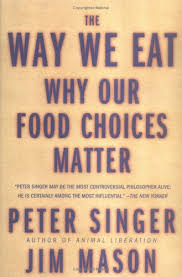
Book Review: The Way we Eat

Just finished reading "The Way we Eat: Why our food choices matter" by Peter Singer and Jim Mason. This was a very thought provoking book for me. Unlike other works on industrialized food such as Food Inc, and Omnivores dilemma this book really focused on the ethical question and how they way we eat effects others. This book provides a very detailed account of the three families with quite different lifestyles and values. It examines the food choices they make and ethical and economical assumptions that drove those choices. They also pull apart the ethics of locavore's and fair trade in similar detail.

Very interesting book which provides great information for ethical food choices and busts a number myths and plain lies around many of the stated ethical practices and badges we find today in our search for food. There is a strong, I felt too strong in places, bias towards Vegan-ism as the way to ethical nirvana. This made me want to defend my omnivorous ways, I find myself more in the Pollan/Fearnley-Whittingstall camp on the consumption of meat and the ethics of doing that, than Singer & Mason are but I respect their viewpoint.

I would recommend this book as a good complementary resource to other more popular works out there, particularly if you are concerned about the effect of your food choices on others as well as yourself.
Reblog this post [with Zemanta]

Tuesday, March 2, 2010

Garden Update

The Snowdrops are in bloom in my garden and despite what the weather is really like this is a key indicator of the end of winter and my thoughts spring (no pun intended) to gardening tasks which set things up for the prime growing season.

In truth this area is one of the few in the world that can support the growing of food crops year round but my garden is not really set up for this. Last year I managed to clear an area down the side yard of my house. Although this area is south facing, because of the proximity of the neighboring house I have to wait for the spring before I get enough light to give plants a fighting chance. The yard itself currently has two raised beds which are about 2.5 ft x 6ft and I hope to clear out a bit more ground this year to get two more similar raised beds installed. I grow a lot of plants in containers, well buckets would be a more accurate description (Home Depot sell 5 gallon buckets for about $2)  but last year I was surprised by the success I had and the amount of food I was able to harvest out of such a small Plot. My point is, that you really don't need to have a lot of space just the right combination of plants and enough sun and water to make them grow. The only tricky part is knowing what to plant and when. I took a community class last run by the Master Gardeners of Santa Clara County and they gave me a wealth of information on what, when and how to garden in our area. You can find classes in the local paper or the community college pamphlets that come twice a year.

Planning for this years planting started back at the beginning of the year when I sowed seeds for many of the summer cropping plants. My tomato, pepper and basil were started under a grow lamp and moved to a indoor windowsill once they had got a few full leaves.  Growing plants from seeds is by far the cheapest way to go and with a bit of planning up front really isn't hard. I simply sowed a few seeds in each pot then set them under the light. As the small shoots came up I thinned out each pot to one plant (just snipped the others off).


The tomato plants are already too big for the lamp box and were moved to a windowsill a couple of weeks ago they will be ready for planting out soon. The peppers and basil needed a little more time to develop but are catching up fast.

I also planted some peas, beetroot, chives and chard outside in a little polythene tented propagator. These required less heat to germinate and so could be sown outside in pots. They are also doing well and will ready for transplant into the main garden quite soon.


One new crop for this year is the potato. I decided that I missed the taste of freshly dug new potatoes just boiled in their skins and served with butter a traditional June treat in the UK. Growing them seemed the best way to get the freshest potato so I splashed out on some seed potatoes and they are currently sitting on the same windowsill as the tomato plants to enable them to sprout. A process in gardening parlance known as chitting. Potato is a great crop for growing in containers. Back home in the UK my father would grow them in garbage cans. I have some deep sturdy bags that will do the job and hopefully by June will have a bumper crop of nice new potatoes. One thing about growing from seed is that you have to hedge your bets on yield and plant sow than you will eventually plant out. This might seem a waste but I can always find people who would like a few plants for their own and so I get to pass on my labors and let others benefit.

I am planning a couple of other projects for the garden this year. Firstly I am planning to use one of my new beds to grow a "Three sisters garden" which is Native American method of planting Corn, beans and squash in a complementary manner which maximizes production in a small space. In a similar vein I am also planning a herbal garden once again influenced by Native American planting methods. In this case the garden is known as a medicine wheel and I will blog about both of these planting methods in later posts.

The absolute best way to get the freshest vegetables is to grow them yourself. Why don't you give it try, you won't be sorry there are tons of resources out there and lots of people willing to help
Reblog this post [with Zemanta]

Sunday, February 7, 2010

Bake it yourself


For some baking can be a bit of black art, indeed I was in the "I can't bake" camp for quite a while. Many feel that it is too tedious, or too hard. I grant you that it does take some practice and some patience but once you have mastered it you won't go back. Just to give you some extra incentive, next time you are in the super market picking up a loaf of sliced white (or even some of that wholewheat designer bread) take a look at the ingredients.   Baked goods is one of main places where the food labs have been having a field day. Baked goods are full of all sorts of additives and chemicals. Bread is quite basic and has the following ingredients; Flour, Water, Yeast, Salt, and optionally some oil. If your loaf  has more in it then you have some modified version of bread.

If you are dead against trying to bake your own It is worth searching around for a good baker who produces their own bread on site. Artisan bread can also be found at many farmers markets also but beware of baked good listed as artisan in supermarkets (even wholefoods) read the labels! Your other option is a bread machine, I started with one of these and you can pick one up at a reasonable price. They are simple to use and provide a great introduction to bread making. You still control what goes in your bread and I you will produce a much better loaf than you can buy.

On the other hand if you fancy trying some baking then below are my three go to recipes. I make these most weeks depending on schedule and need. I am going to start with a sweet recipe which in my opinion is fool proof and ultimately configurable to your tastes and  provisions. Unlike most baking recipes it uses a measure of volume. I use a mug, but you could use a cup or something bigger depending on the size of loaf

Fruited Bran Loaf.

I believe this recipe originates from Scotland. You need your Mug, a bowl and a baking tin (I used a medium loaf tin). Take your Mug and fill it with Bran (oat or wheat) and pour into the bowl, fill the same mug with Sugar (I use raw brown sugar but it doesn't matter) and pour into bowl. Fill the mug again with dried fruit, any combination you like or have available. Mix and match, experiment and have fun. Pour this into the bowl along with a Mug of milk. Give it a stir and leave to soak at least 4 hours. I sometimes leave over night, or put it together in the morning and complete when I come home from work.

After the mix has been soaking add a mug full of self rising flour. This might be hard to get hold of in the US but it really just a regular white flour and baking powder. I make my own (because I know it is fresh then) from stone ground white flour at a ratio of 4% baking powder to flour (100g of flour, means 4g of baking powder) in my mug this means about 1 teaspoon. Pour in your mug of self rising flour and stir to combine. Pour into your baking tin and place in a medium oven (350 deg F) a leave for at least 45 mins it can take well over an hour to cook, to test if it is cook simply press the top with your finger when it is firm (pushes back) you can pull the loaf out. Allow to cool then serve sliced with or without butter. This loaf will a week in a sealed container, but it problem will be gone quite quickly.

Soda Bread

If you have no time to make yeast leavened bread then a great quick standby is Soda Bread.  Soda bread is great with soups and stews or with a hunk of cheese and beer. It is simple to make and doesn't take much time.


Preheat your oven to 400 deg F
You will need the following ingredients

  • 250g Flour (White or Wholewheat) 
  • 5g salt
  • 2tsp baking powder
  • 150ml of Buttermilk, Thin yogurt, milk or even water
Combine dry ingredients in a bowl, then add the wet and mix with your fingers to make a dough (should be quite wet if not add more liquid) don't over mix. Turn out onto cookie sheet and form into a round dust with flour and then cut a deep cross. Place in the oven and bake for 20-20mins. This bread is best eaten warm with lashings of butter.

Daily Bread


The following recipe is the one I use for my daily bread, well I make it over 2 days or so. This recipe will work with either white or wholewheat flour. Making good bread is all about technique and that is quite an involved subject which would be impossible to cover here and I think this is something that needs to be experienced visually and youtube is a great resource. I floundered for a while not able to achieve consistent results and producing my fair share of hockey pucks as well as decent bread until I encounter a book by Daniel Stevens who is the baker for River Cottage, his techniques helped me to produce a consistent loaf of bread (see Dan on Youtube). 

Ingredients

500g Flour (White or Wholewheat or a mix)
5g of Dried Yeast
350ml of water
10 g of salt
Tablespoon of Oil

Baking bread is done in three stages. The first stage creates the sponge where the yeast is cultivated for this particular loaf it is optional but I always do it. Mix together half of the flour with all of the water and the yeast in a bowl. This will create a very wet sloppy dough. Cover the bowl and leave overnight to ferment. 

Phase two is about kneading and proving the dough ready for baking. During the night the yeast will multiply and feed on the flour and in the morning the sponge should be formed, the mixture having risen and be frothy and light. Now add the rest of the flour along with the salt and the oil. Bring together into a sticky dough. At this point a stand mixer with a dough hook is a good idea but for those without or if you want to work those muscles then hand kneading can be done (look on youtube for technique) kneading must be done for at least 15 mins longer won't hurt. Once done the dough will loose it's initial stickiness and become stretchy as the gluten formed by the kneading binds the dough. Form kneaded dough into a ball and place in an oiled bowl which has room for the bread to double in size. Cover and leave on the counter until it has doubled in size, or you can put it in the fridge go off to work and leave it rising slowly throughout the day. 

The final phase is shaping and baking. Take your risen dough and press it down knocking all the breath out of it. Turn it out onto a flat surface and shape ready for baking, place in tin if using or free form, leave to rise for an hour (2 if you brought the dough out of the fridge). If you are shaping a free form loaf then place it on a baking try. Then bring your oven up to it maximum temperature. I use a pizza stone in my oven as a baking surface but you can use a traditional baking tin. Once the oven is up to temperature, put your risen loaf in the oven and bake for 10 mins. You should cut slashes in the top of your loaf before putting it in the oven since that helps it to expand without bursting. A bread knife does a good job at slashing the bread. After 10 mins reduce the oven to 400 deg F and cook for a further 30mins. After that time remove and cool on a rack. If you are using a tin turn the bread out as soon as you can so that it doesn't sweat.

So making bread isn't for everyone, it is involved and when mastered very satisfying and it opens a whole new world to you. Donuts anyone.....well that is another post..

Friday, January 22, 2010

A pig story -

This time of year is an exciting one in my house because this is the time when our pig becomes pork!. When I say "Our Pig" I mean the one that Windsor Family Farms reared for us. This year is even more exciting in that we finally went for the whole Hog! (in past years we just had half of one!)

This post might not be for the squeamish or vegetarians, whom I have a lot of respect for, but I am, a meat eater, and I worry about where my meat comes from and how it was raised. If you haven't asked yourself these questions yet then I suggest you watch Food Inc or read Omnivores Dilemma. Where our meat comes from and how it is raised is a bit of an issue today because our typical mode of buying meat leads us to pre-packed lumps of protein sitting in a cold chest with labels to remind us which species of animal it belongs to.

When I embarked on this slow food journey sourcing local and ethically raised meat was the one part which really worried me the most. Obviously there was no way I was going to get away with starting a small farm in the back yard so I had to research. Firstly I found a good set of resources online, Niman Ranch was my first find and these guys do an awesome job and provide a great service. Secondly there are the local farmers markets where some producers sell grass fed and humanely reared meat and finally I live just down the road from a large Wholefoods who at least tell me where the meat is from. All of these sources are convenient but they can be expensive.

Then, by accident, I found Windsor Family Farms, a very small farm just 40 mins away from Cupertino in San Martin. The farm is run by Kim and Kyle Windsor (and their children) is what would be called a small holding in the UK, they rear a few animals really well with the care and respect that leads to the best possible health and eventually meat. Buying meat direct from a farm may seem like a scary deal but it actually turned out to be quite painless. It is best to do a bit research on the animal your buying and at least know the main cuts (known as the prime cuts) and preparations. You will also need a freezer, not as large as you might think but you will need one. In case you are thinking that at some point a dead animal will end up on your doorstep, or perhaps worse a live one, for you to deal with! Don't panic it isn't like this at all. When the animal is due to go to slaughter (and the exact time will depend on the how Farmer thinks the animal is doing) you get a notification to prepare yourself. This is a time to clear out all those left overs from your freezer. The next thing that happens is, you call the butcher that receives the animal (or they will call you). All local meat producers work with a local butcher who will prepare the meat how you want it (yes you can have it your way!) in the case of Windsor they use Freedom Meats in Freedom near Watsonville (an excellent butcher and curer of meat). The butcher will prepare the meat into the cuts, turn the trimmings into mince and basically do what you want. Freedom will even cured your hams, and make your bacon (assuming you are picking up a pig). They flash freeze and box it up for you to collect. That is it! Costs factored as follows, there is a live weight fee for the animal and nominal slaughter fee (goes to the producer) and then the costs of Butchering. However when you factor in everything your Pork is going to cost around $3:50 - $5.00 per pound depending on how much work you want the butcher to do (this year for grass fed beef I paid about $7.00 per pound). Which is a deal! and if you have freezer a good way to go and the meat is absolutely top notch.

The Windsors deal mainly in pigs, they do have a steer occasionally. I have also found a couple of larger local farms, well ranches in the area. Morris Grass Fed Beef in San Juan Batista and Paicines Ranch in Paicines CA. These operate in a similar fashion to Windsor but on a larger scale and they deliver the butchered meat straight from the farm.  Paicines also operate a meat CSA through Eat with the Seasons. Typically there is a minimum order for delivery and an upfront deposit. The larger farms such as Paicines will allow you buy cuts of meat ala-cart but the prices go up considerable, buying in bulk gets the best price. Going directly to the source of your meat is great experience, you get to the see the passion and care these people put into rearing they animals and you get to understand the process and most important just who is messing with your meat!! if you live in the Cupertino area I encourage you to check out the resources above, if not then do some research on local producers in your area.

Potential Gross part ahead!

So in a week of so I expect a call from Freedom telling me my hog is ready. I have them do minimal processing because I like to do my own curing and sausage making which I will post about during the year. I also enjoy the offal which isn't for everyone but I would say you haven't tasted the real stuff until you have had it fresh. Offal needs to be eaten or processed with 72 hrs of slaughter. One really nice thing about working directly with the farmer is that you can get the offal fresh. I picked up the offal from my Hog last weekend and spent a day prepping it and turning it into yummy things can be frozen without losing the quality or texture. The main parts I use is the heart, liver and kidneys.

I made two family favorites, a rich liver pâté, and a dish from back in the UK which has an unfortunate name, one that is used in a derogatory sense in the US. So here I mean it in the culinary sense, this dish is called Faggots which are savory dumplings made from the liver and the heart mixed with herbs and spices (recipes available on request) and delicious with onion gravy and peas..

So more on the pig story when rest arrives, can't wait!.


Reblog this post [with Zemanta]

Friday, January 8, 2010

Slow Veggies

A single week's fruits and vegetables from com...Image via Wikipedia


One issue of trying to adopt a more seasonal approach to the food you eat is sourcing the raw materials. This is certainly step one and once you make it It is all down hill. A movement towards "slow food" rather than the existing industrial processed food you find in your local mega-mart is a bit of a commitment but if you are reading this then you are hopefully thinking of making a start down that path.

So this post is about Vegetables, and although some might describe veggies as the stuff that food eats!, you are spoiled for choice living in the bay area as compared to other parts of the US. There are an astonishing number of tasty veggies which grow local but never even make it to your supermarkets and as you dig into where and what you are eating you will be surprised just what you have been missing.

So on to Veggies and how to find them in season and from local producers. There are three main ways of accomplishing this depending on how much time and control you want to exert. For myself I have reached a point in my journey where I use all three but just choosing one of the following methods will get you started on your slow feed adventure.

The Veggie Box.

This option is the one requiring the least commitment but there is some up front work to set it up. Basically having someone pack up a bunch of local in-season veggies into a box or bag and dropping them on your doorstep, or to a local drop point for you to pick up. No fuss, no mess, no queuing. These schemes are called CSA's or more formally community supported agriculture. There are a number of such schemes out there and they typically require an upfront fee in order to secure the goods. These schemes vary from single farms to cooperatives working with many local producers. Many offer dairy and meat products along with the veggie boxes. The good news is that in the bay there are quite a few CSA's available for you to choose from, the trick is finding them. Well the best way I have found is to use the excellent resources of Local Harvest (http://www.localharvest.org/). The Local Harvest website provides a simple web form where you can click to find CSA's operating in your area and get a decent overview of the kind of service they. Note that some schemes do not allow for cancellation for vacation periods, and they often don't operate year round.

My particular Food Hero in this category is Eat with the Seasons a CSA/Coopertive working in the Bay Area. I have been using this particular service for the last three years and can recommend them. They have nice features which are not found in all CSA schemes. Each week they send you by email a list of seasonal produce from which you can select what you would like. They also include local dairy products and also meat through the excellent Pacines Ranch. The other nice feature they have is that you can cancel or donate your order (should you be out of town) and finally they provide weekly recipes for the produce they are providing.

Which ever one you choose now is a good time to sign up for a CSA as they are starting out assembling their customer base for 2010

The Farmers Market


This is a step up in commitment from a CSA in that you actually have to get in your favorite means of transport and travel (on a weekly basis), then browse and shop for what you want or more accurately what is available. You have a lot more control but you have to make time to go and choose. There are a number of farmers markets in the Cupertino area and they are all fairly similar, in fact many of the same vendors go to all the local venues. To find one near you and the times of operations the previously mentioned Local Harvest comes to the rescue again, although it is best to check the local city website to double check the information as times and locations do change. A few things to consider when going to a farmers market, well it is pointless making a list! Part of the fun is discovery. Take a bag to put your produce in, and take cash rather than plastic to pay. Finally if you see something you don't recognize, ask the producer who will be only too happy to tell you what it is, give you a taste and even whip out a family recipe for you to take with you. The other fun thing about farmers markets are the samplers, I swear you eat your 5 a day there.

My favorite in the Cupertino area (is sadly not the one in Cupertino sorry guys!) is the one in Campbell. I like it because it is on the weekend and positioned right in the middle of town with good free parking. Being in town means the local shops and restaurants are also open should you need additional refreshment or retail therapy.

Grow Your Own

Obviously this is quite a commitment and realistically unless you live on a farm or have access to a significant amount of land (unlikely if you live in Cupertino) then this option is only going to enhance rather than sustain your veggie stocks though-out the year. Having said that, growing your own is excellent for those special hard to get fruits and vegetables or where having them available to hand it not only convenient but just the best way to eat them. Freshly cut/picked fruits and vegetables maintain the maximum amount of taste and nutrition value. You don't need a lot of space to set up a modest vegetable garden and for those of you in apartments it is feasible to grow quite a lot in containers and pots, both indoors and outdoors, and/or on balconies and windowsills (also as my daughters will attest under fluorescent lamps in a darkened student studio). I planted my garden in a side yard and was surprise how much produce I could grow on such a small piece of land. The great thing about having a garden is how much control you have on what you grow and the varieties, not to mention the cost effectiveness.

I will cover in future posts the setting up a vegetable garden and what to grow as this is a massive subject. But there are a number of great resources you can utilize if you are interested in setting up a garden. First thing would be to check out your local community colleges to if there a courses available. I found that the Master Gardeners of Santa Clara did a number of really good courses which can introduce you to all aspects of sustainable gardening in California. The Bay Area in particular is one of 5 areas in the world where it is possible to grow all year around. Secondly if you don't have land of your own then check to see if your city supports a community gardening program. They are to come by but many cities to have such program.


I hope what is written above is useful and will help you make choices that are right for you at this time. The most important thing is as you journey on your own personal adventure is to talk about it with your friends and help them understand the values and commitments to such a lifestyle.


Reblog this post [with Zemanta]